
Bosch MD1 ECU Programming Guide: Architecture, Processors, Memory and Diagnostics
Bosch MD1 ECU Programming Guide: Architecture, Processors, Memory and Diagnostics
Bosch MD1 is a modern family of diesel engine control units developed for advanced diesel engine management applications. These controllers are used in different passenger cars, commercial vehicles and other diesel-powered platforms.
Compared with older ECU generations, MD1 controllers feature more advanced processing capabilities, sophisticated memory architectures and enhanced electronic security mechanisms.
For professional automotive electronics technicians, understanding Bosch MD1 hardware identification, processor technology, memory organization and programming methods is essential before performing ECU reading, writing, backup or replacement operations.
This guide explains Bosch MD1 controller families, diesel engine management, processor architecture, Flash memory, OBD programming, Bench programming and Boot access.
1. What Is Bosch MD1?
Bosch MD1 is a family of electronic diesel engine management systems designed for modern diesel vehicle applications.
Depending on the specific engine and vehicle configuration, MD1 controllers may manage:
- Common rail fuel injection.
- Fuel injection quantity and timing.
- Fuel rail pressure regulation.
- Turbocharger boost pressure.
- Engine torque management.
- Exhaust gas recirculation.
- Diesel particulate filter management.
- Selective catalytic reduction coordination.
- Emissions monitoring.
- Engine protection strategies.
Actual functions depend on the ECU hardware, software and vehicle application.
2. Common Bosch MD1 Variants
The MD1 family contains different controller variants designed for specific engine platforms and vehicle manufacturers.
Examples of commonly encountered designations include:
- MD1CS001.
- MD1CS004.
- MD1CS006.
- MD1CS008.
- MD1CS012.
- MD1CS014.
- MD1CP001.
- MD1CP004.
- MD1CP006.
This is a selection of MD1 designations rather than a complete controller list.
Different variants may have different processors, memory configurations, hardware revisions and programming requirements.
Support for one MD1 controller does not automatically guarantee compatibility with every other MD1 version.
3. Understanding Bosch MD1 Hardware Architecture
A modern diesel engine control unit combines electronic hardware, embedded software and communication interfaces.
Depending on the MD1 generation, internal components may include:
- Automotive microcontroller.
- Internal Flash memory.
- Data Flash or other non-volatile memory.
- RAM.
- Power management circuits.
- CAN communication interfaces.
- Injector driver circuits.
- Sensor input circuits.
- Actuator control circuits.
The exact architecture depends on the complete ECU hardware number and processor generation.
4. Understanding Infineon AURIX Processor Technology
Many Bosch MD1 controllers use advanced automotive microcontroller technology, including Infineon AURIX processor families.
AURIX processors are designed for demanding automotive applications requiring real-time processing, reliable operation and integrated security features.
Depending on the specific controller, processor characteristics may include:
- Multi-core processing architecture.
- Integrated Flash memory.
- RAM resources.
- Automotive communication interfaces.
- Hardware security features.
- Functional safety mechanisms.
Different processor generations have different memory structures and programming requirements.
Technicians should verify the exact microcontroller model rather than assuming every MD1 controller uses identical hardware.
5. Understanding MD1 Diesel Engine Management
MD1 controllers coordinate multiple diesel engine systems using information received from vehicle sensors and other electronic modules.
Depending on the engine configuration, important control functions may include:
- Engine speed calculation.
- Fuel injection control.
- Fuel pressure regulation.
- Airflow management.
- Boost pressure regulation.
- Torque calculation.
- Engine temperature monitoring.
- Emissions system management.
The ECU continuously evaluates operating conditions to maintain engine performance, efficiency and protection.
6. Understanding Common Rail Fuel Injection
Many diesel engines using MD1 controllers feature common rail fuel injection technology.
The system stores high-pressure fuel in a common rail and electronically controls fuel delivery through individual injectors.
Important components may include:
- High-pressure fuel pump.
- Common rail.
- Fuel rail pressure sensor.
- Fuel metering valve.
- Pressure regulation components.
- Electronic fuel injectors.
The ECU coordinates these components according to engine speed, load, temperature and other operating conditions.
7. Understanding MD1 Turbocharger Management
Many vehicles equipped with Bosch MD1 controllers use turbocharged diesel engines.
Depending on the engine configuration, the ECU may coordinate:
- Boost pressure targets.
- Turbocharger actuator operation.
- Variable geometry turbocharger regulation where applicable.
- Airflow monitoring.
- Exhaust gas management.
- Engine torque limitations.
Abnormal boost pressure readings may result from sensor faults, intake leaks, actuator problems or mechanical turbocharger damage.
8. Understanding MD1 Emissions Management
Modern diesel engines use several emissions control technologies to reduce exhaust pollutants.
Depending on the vehicle application, MD1 may coordinate:
- Exhaust gas recirculation.
- Diesel particulate filter monitoring.
- Exhaust temperature monitoring.
- Selective catalytic reduction systems.
- NOx sensor information.
- Other manufacturer-specific emissions components.
The exact emissions equipment depends on the engine generation and vehicle market.
9. Understanding Bosch MD1 Flash Memory
Flash memory stores important software and calibration information required for ECU operation.
Depending on the MD1 architecture, Flash memory may contain:
- Engine application software.
- Fuel injection strategies.
- Rail pressure control parameters.
- Torque management maps.
- Boost pressure calibration.
- Emissions management strategies.
- Diagnostic functions.
Supported Flash reading operations can retrieve selected memory data for backup and compatible programming applications.
Memory size and organization vary according to the controller hardware and processor generation.
10. Understanding Data Flash and Persistent Memory
Modern automotive controllers use non-volatile memory to retain selected information when electrical power is disconnected.
Depending on the MD1 architecture, persistent information may include:
- Controller configuration.
- Selected adaptation information.
- Identification data.
- Manufacturer-specific parameters.
- Other persistent operating information.
Some controllers use internal Data Flash or integrated non-volatile memory rather than a separate EEPROM chip.
Technicians should identify the actual memory architecture before performing backup or transfer operations.
11. Understanding MD1 ECU Security
Security is an important characteristic of modern Bosch MD1 controllers.
Depending on the hardware and software generation, security mechanisms may include:
- Secure Boot.
- Protected memory regions.
- Authenticated programming access.
- Cryptographic verification.
- Hardware security resources.
- Manufacturer-specific authorization.
These mechanisms help protect software integrity and prevent unauthorized access or modification.
Security capabilities vary between controller generations and software versions.
Bench or Boot access does not automatically remove every security restriction.
12. OBD Programming for Bosch MD1
OBD programming communicates with supported MD1 controllers through the vehicle diagnostic connector.
Depending on the ECU hardware and available protocol, supported operations may include:
- ECU identification.
- Software identification.
- Supported Flash reading.
- Supported Flash writing.
- Selected diagnostic operations.
One advantage of OBD programming is that the ECU generally remains installed in the vehicle.
However, not every MD1 controller supports complete memory access through OBD.
13. Bench Programming for MD1
Bench programming connects directly to a removed ECU using supported external electrical connections.
Depending on the MD1 hardware, connections may include:
- Battery power.
- Ignition-switched power.
- Ground connections.
- CAN-H.
- CAN-L.
- Additional activation or communication signals.
Bench programming may support ECU identification, Flash reading, Flash writing and selected memory operations.
Always verify the exact wiring diagram for the complete Bosch hardware number before connecting programming equipment.
14. Understanding Boot Programming
Boot programming provides supported low-level access to selected automotive microcontrollers.
Depending on the processor and available programming protocol, operations may include:
- Processor identification.
- Supported Flash reading.
- Supported Flash writing.
- Selected memory operations.
- Specific software recovery procedures.
Boot access requirements vary according to processor generation and ECU design.
Not every MD1 controller supports the same Boot programming procedure.
15. Understanding MD1 ECU Identification
Accurate identification is essential before selecting a programming protocol.
Important identification information includes:
- Bosch hardware number.
- Complete ECU part number.
- MD1 controller variant.
- Hardware revision.
- Software identification.
- Processor model.
- Memory configuration.
- Vehicle manufacturer.
- Engine application.
Identifying a controller only as MD1CS001 or MD1CP001 may not provide enough information to establish complete programming compatibility.
Different hardware and software revisions may require different procedures.
16. Understanding MD1 ECU Reading and Writing
ECU reading retrieves supported memory information from the controller, while ECU writing transfers compatible software or calibration data into the ECU.
Depending on the programming protocol, available operations may include:
- Flash reading.
- Flash writing.
- Supported persistent memory operations.
- Original software backup.
- Selected memory restoration.
Reading and writing are separate capabilities. Successful reading does not automatically guarantee writing support through the same programming method.
17. Understanding Bosch MD1 ECU Cloning
ECU cloning involves transferring supported electronic memory data from an original controller to compatible replacement hardware.
Depending on the MD1 hardware, the process may involve:
- Original Flash backup.
- Supported persistent memory backup.
- Replacement hardware verification.
- Compatible memory transfer.
- Software identification checks.
- Final diagnostic verification.
Not every MD1 controller supports conventional cloning.
Hardware compatibility, memory architecture and manufacturer-specific security requirements must be verified before transferring data.
18. Understanding Checksum Verification
Checksum verification helps maintain data integrity during supported ECU programming operations.
Depending on the MD1 software architecture, checksum calculations may apply to selected memory regions or calibration blocks.
Important considerations include:
- Correct ECU identification.
- Compatible software files.
- Supported checksum algorithms.
- Correct memory structure.
- Final file verification.
Checksum requirements may differ between MD1 variants and software versions.
19. Common Bosch MD1 Problems
MD1-related problems may originate from electronic, mechanical, software or communication faults.
Common symptoms include:
- Engine fails to start.
- Loss of engine power.
- Fuel pressure problems.
- Turbocharger performance problems.
- Injector-related faults.
- Emissions system warnings.
- ECU communication failure.
- Software programming errors.
These symptoms do not automatically indicate internal ECU failure.
Technicians should inspect power supply, wiring, sensors, fuel delivery and mechanical components before deciding that the controller requires replacement.
20. Troubleshooting MD1 Communication Problems
A systematic diagnostic procedure helps identify the source of communication failures.
Step 1: Confirm ECU Identification
Record the complete Bosch hardware number, MD1 variant and software information.
Step 2: Check Power Supply
Verify battery voltage and ECU power connections.
Step 3: Inspect Ground Connections
Check ground connections and connector condition.
Step 4: Check Communication Wiring
Inspect CAN-H, CAN-L and other applicable communication circuits.
Step 5: Confirm Protocol Compatibility
Verify that the selected programming protocol supports the exact MD1 hardware.
Step 6: Inspect ECU Hardware
If external connections are correct, further electronic inspection may be required.
21. Best Practices for Bosch MD1 Programming
Professional technicians should follow these practices when working with MD1 controllers.
- Record the complete Bosch hardware number.
- Identify the exact MD1 variant.
- Confirm processor architecture.
- Verify programming protocol compatibility.
- Use the correct wiring diagram.
- Maintain stable electrical power.
- Back up supported original memory.
- Verify software and calibration compatibility.
- Check checksum requirements.
- Avoid interrupting Flash writing operations.
- Perform final diagnostic verification.
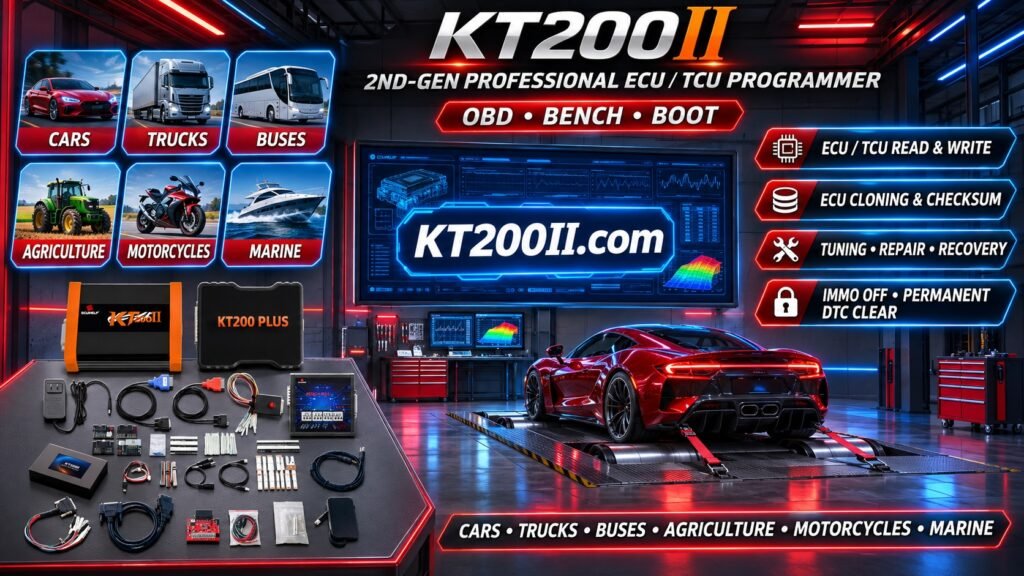
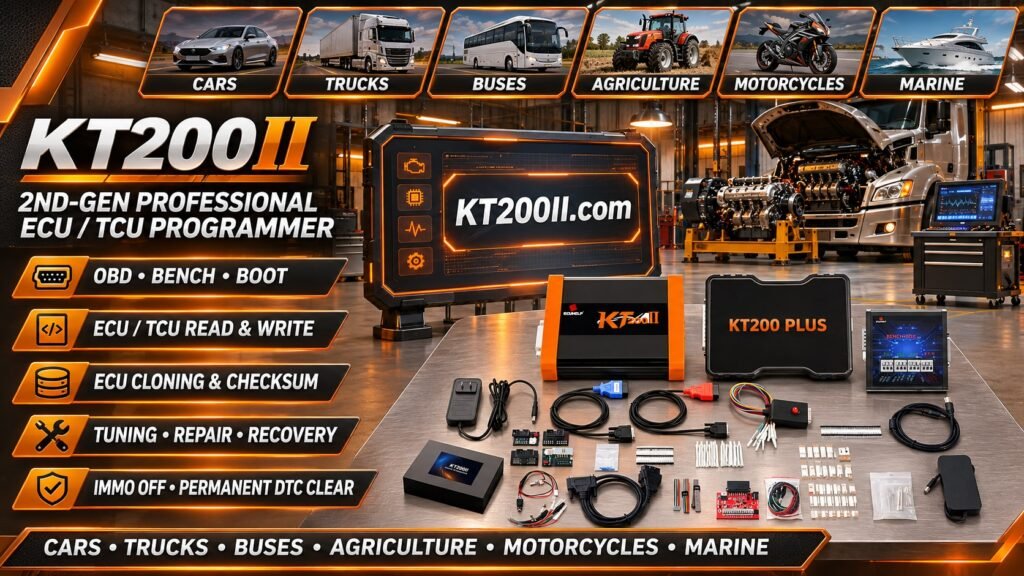
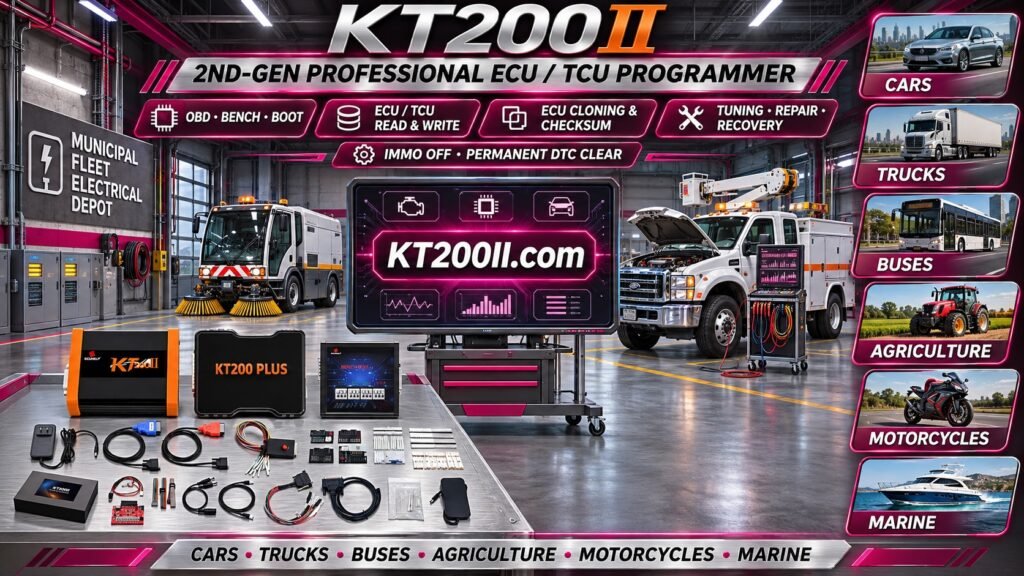
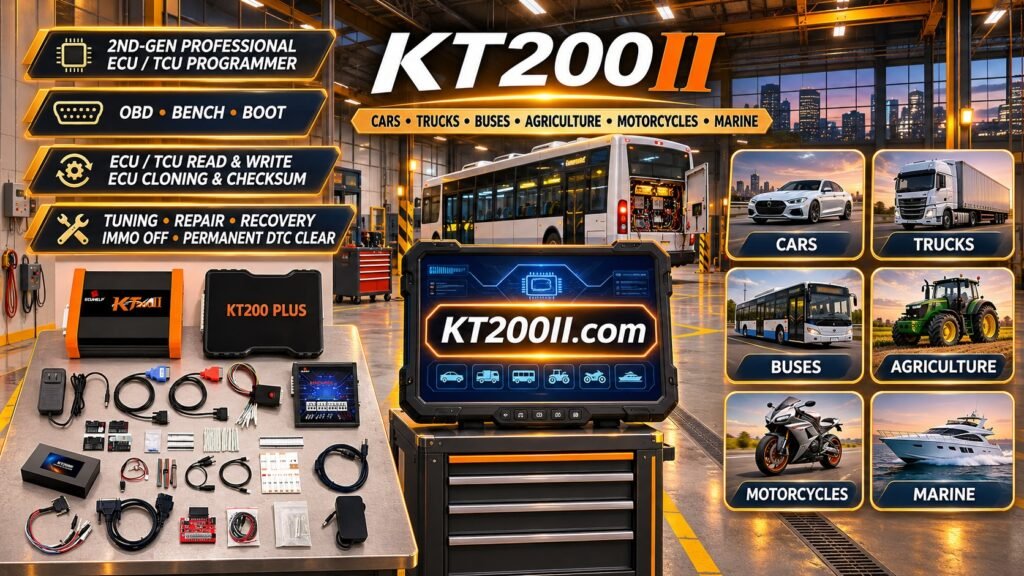
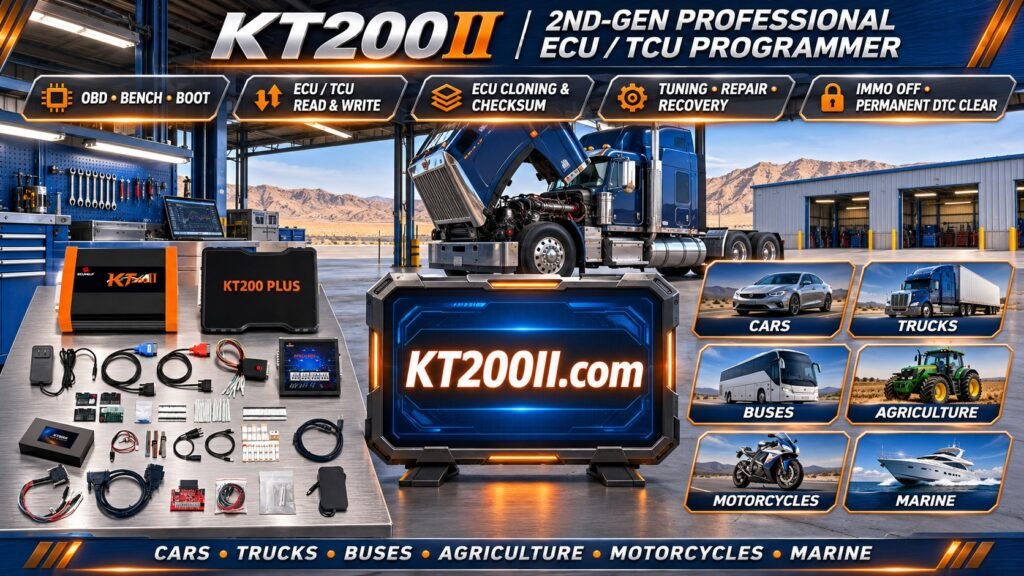
22. How KT200II Supports MD1 Programming Workflows
KT200II is an automotive ECU and TCU programming tool designed for professional automotive electronics applications.
Depending on the supported MD1 hardware and available programming protocol, supported workflows may include:
- ECU identification.
- Supported Flash reading.
- Supported Flash writing.
- Selected memory operations.
- Supported OBD programming.
- Supported Bench programming.
- Supported Boot operations.
- Original data backup where supported.
Actual compatibility depends on the complete Bosch hardware number, processor architecture, memory configuration and software version.
Support for one MD1 controller does not automatically guarantee compatibility with every MD1 variant.
Before starting a programming operation, verify the exact ECU against the latest KT200II support information.
For additional information, visit:
- KT200II Product Information
- KT200II Operation Modes
- KT200II Software
- KT200II Support List
- KT200II Technical Articles
23. MD1 Programming Checklist
Before beginning an MD1 programming operation, confirm:
- Vehicle identification recorded.
- Bosch ECU hardware number recorded.
- Exact MD1 variant identified.
- Software identification checked.
- Processor architecture identified where necessary.
- Memory configuration understood.
- Programming compatibility verified.
- OBD, Bench or Boot method selected.
- Correct wiring diagram obtained.
- Power and ground connections checked.
- Original data backed up where supported.
- Target file compatibility confirmed.
- Checksum requirements verified.
- Programming completed successfully.
- Final engine diagnostics performed.
Frequently Asked Questions
What is Bosch MD1?
Bosch MD1 is a family of modern diesel engine control units used in selected passenger car and commercial vehicle applications.
What is the difference between MD1CS001 and MD1CP001?
They are different controller designations with potentially different hardware, processor, memory and programming requirements. Exact compatibility must be checked using the complete ECU identification.
Which processors are used in Bosch MD1?
Many MD1 controllers use advanced automotive microcontrollers, including Infineon AURIX families. The exact processor depends on the hardware generation.
Can all MD1 controllers be programmed through OBD?
No. OBD programming availability depends on the exact hardware, software version and supported programming protocol.
What is the difference between MD1 Bench and Boot programming?
Bench programming uses supported external ECU connections, while Boot programming provides processor-specific low-level access.
Can Bosch MD1 controllers be cloned?
Selected controllers support memory backup and transfer operations. Complete cloning compatibility must be verified against the exact hardware and security requirements.
Does every MD1 use the same memory architecture?
No. Memory configurations vary between MD1 generations, processors and hardware variants.
Does successful MD1 reading guarantee successful writing?
No. Reading and writing support are separate capabilities and must be verified independently.
Why does an MD1 ECU fail to communicate?
Possible causes include missing power, poor grounding, damaged communication wiring, incorrect protocol selection or internal ECU hardware failure.
Conclusion
Bosch MD1 is an important generation of modern diesel engine management technology.
Understanding its processor architecture, memory organization, security features and programming methods helps technicians identify controllers and select appropriate ECU reading and writing procedures.
Successful MD1 programming requires accurate hardware identification, compatible software, correct wiring, stable electrical power and final verification.
KT200II provides ECU and TCU programming solutions for professional automotive technicians, with available functions depending on the supported controller and software protocol.
Visit KT200II.com to explore product information, operation modes, software resources and the latest support information.