ECU Cloning vs ECU Replacement: Differences, Requirements and Compatibility
ECU Cloning vs ECU Replacement: Differences, Requirements and Compatibility
When an engine control unit fails, automotive technicians may need to transfer supported data to another controller or install a replacement ECU. Two approaches commonly discussed in ECU repair are ECU cloning and ECU replacement.
Although these approaches can be related, they are not identical. ECU cloning generally involves transferring specified data from an original controller to a compatible donor unit, while ECU replacement describes the broader process of installing another controller and completing the programming or configuration required by the vehicle.
Choosing the correct approach depends on the original ECU's condition, the compatibility of the replacement hardware, the available data and the programming functions supported by the selected tool.
This KT200II guide explains how ECU cloning and replacement differ, what technicians should verify before starting and how to reduce avoidable problems during a supported ECU repair.
1. What Is ECU Cloning?
ECU cloning is a repair technique that transfers specified data from an original engine control unit to a compatible donor ECU. Depending on the controller architecture and supported procedure, the transferred data may include software, configuration information or other relevant memory contents.
The objective is to prepare the donor controller to serve the intended application while preserving the data required for compatibility.
Depending on the ECU, a cloning procedure may involve:
- Identifying the original and donor controllers.
- Reading supported memory regions from the original ECU.
- Saving and verifying the available original data.
- Checking hardware and software compatibility.
- Writing compatible data to the donor ECU using a supported procedure.
- Verifying controller communication and required vehicle functions.
Not every ECU supports complete cloning, and not every programming tool can access all relevant memory regions. The exact procedure depends on the controller, its architecture and the supported programming protocol.
2. What Is ECU Replacement?
ECU replacement is the broader process of removing a faulty or unsuitable controller and installing another unit that is appropriate for the vehicle.
A replacement ECU may be new, manufacturer-refurbished or obtained from another vehicle. Its suitability depends on the hardware, software, vehicle application and manufacturer requirements.
Depending on the vehicle, replacement may require:
- Matching the replacement ECU to the vehicle application.
- Checking the controller's hardware and software identification.
- Installing compatible software where required.
- Completing vehicle-specific coding or configuration.
- Performing authorized immobilizer or security-related adaptation when applicable.
- Carrying out required initialization and diagnostic checks.
A physically compatible ECU is not necessarily ready to operate immediately after installation. Some vehicles require additional configuration or manufacturer-prescribed procedures before the replacement controller functions correctly.
3. ECU Cloning vs ECU Replacement: Main Differences
| Feature | ECU Cloning | ECU Replacement |
|---|---|---|
| Main objective | Transfer specified data to a compatible donor ECU | Install another suitable controller and complete the required setup |
| Original ECU condition | Useful original data must be accessible or otherwise available | The original ECU may be damaged or completely unresponsive |
| Donor ECU requirements | Must support the required data transfer and intended application | Must meet hardware and vehicle application requirements |
| Data handling | Requires identifying which original data can and should be transferred | May require new software, coding, configuration or adaptation |
| Security-related requirements | May involve supported security-related data where applicable | May require authorized pairing or initialization procedures |
| Programming requirements | Depend on the supported source-to-donor transfer procedure | Depend on the replacement ECU and vehicle manufacturer's procedure |
Neither approach is universally better. The appropriate choice depends on the controller's condition, the availability of original data, the donor unit and the vehicle's technical requirements.
4. When Is ECU Cloning a Suitable Option?
ECU cloning may be worth considering when the original controller has a fault but relevant data remains accessible and a compatible donor ECU is available.
Possible situations include:
- The original ECU has a hardware fault but still allows the required data to be read.
- A compatible donor controller has been obtained for a supported repair.
- The documented procedure allows the required data to be transferred.
- The technician can establish the original and donor controller's compatibility.
Before choosing cloning, determine which memory regions are accessible and whether the selected programming method supports the required transfer.
If the original ECU is severely damaged, has inaccessible memory or cannot provide essential data, a cloning procedure may be incomplete or unavailable.
In such cases, another documented repair or replacement procedure may be necessary.
5. When Is ECU Replacement More Appropriate?
ECU replacement may be necessary when the original controller cannot be repaired economically or no longer provides access to the data required for the intended cloning procedure.
It may also be appropriate when the vehicle manufacturer specifies replacement and a corresponding programming or configuration process.
Before installing another ECU, verify:
- The replacement part number and applicable revisions.
- The controller's hardware compatibility.
- The software and vehicle application requirements.
- Whether the replacement needs programming or coding.
- Whether immobilizer or security-related adaptation is required.
- Whether additional modules or vehicle configurations must be addressed.
Do not assume that an ECU from the same vehicle model will work without additional procedures. Different engines, transmissions, production revisions and market configurations may use different controller variants.
6. Why ECU Hardware Compatibility Matters
Before cloning data or installing a replacement ECU, technicians should establish that the donor hardware is appropriate for the intended application.
Relevant identification information may include:
- ECU manufacturer and complete part number.
- Hardware number and revision.
- Processor or microcontroller family.
- Memory architecture and available memory regions.
- Software identification where available.
- Vehicle and engine configuration.
Two ECUs may have similar housings and connectors but different internal hardware. They may also use different software architectures or memory layouts.
A matching part number is useful evidence, but it should not replace the compatibility checks required by the specific controller and vehicle.
When the donor hardware differs from the original ECU, confirm that the manufacturer or documented programming procedure permits the intended application before transferring data.
7. Which ECU Data May Need to Be Transferred?
The data required for cloning varies between ECU families. There is no universal memory layout or single file that represents every function of every engine controller.
Depending on the supported procedure, relevant data may include:
- Application software or supported Flash memory regions.
- Configuration data.
- Supported non-volatile memory contents.
- Vehicle-specific adaptation or identification information where applicable.
- Other controller-specific data required by the documented procedure.
These categories are examples, not a guarantee that every ECU stores them separately or makes them accessible through the same programming method.
Before transferring data, establish what the original Read operation actually retrieves and what the donor ECU requires.
A file should not be considered a complete ECU backup simply because it was read successfully. Some controllers require multiple supported operations to retrieve different memory regions.
8. ECU Cloning and Immobilizer Compatibility
Some vehicles use immobilizer systems or other security-related functions that coordinate authorization between the engine ECU and other vehicle modules.
Depending on the vehicle architecture, replacing an ECU may require an authorized adaptation, pairing or initialization procedure.
Before beginning a repair, establish:
- Whether the ECU participates in the vehicle's immobilizer system.
- Whether the replacement requires an authorized pairing procedure.
- Whether the relevant data can be transferred using a supported method.
- Whether additional vehicle modules are involved.
- Whether the vehicle manufacturer specifies a particular replacement procedure.
Do not assume that transferring one memory region automatically completes every security-related requirement. Different vehicle platforms implement these functions differently.
Security-related operations should be performed only on vehicles and controllers you are authorized to service, using documented procedures and appropriate authorization.
9. What If the Original ECU Cannot Be Read?
An unresponsive ECU creates a different challenge from a controller that communicates normally but has a specific hardware fault.
If the original ECU cannot be read, first determine whether the problem is related to power, wiring, communication or internal controller damage.
A methodical assessment includes:
- Confirming the original ECU's part number and hardware identification.
- Checking the electrical supply and ground connections.
- Inspecting relevant connectors and communication wiring.
- Reviewing the programming software's error message.
- Determining whether another supported identification or access method is documented.
- Checking whether an existing verified backup is available.
- Evaluating the manufacturer's replacement procedure if essential data cannot be recovered.
Do not assume that switching to a different programming mode will restore access. Specialized access methods depend on the controller, its condition and the supported protocol.
If the controller is physically damaged or the correct recovery procedure is unclear, further diagnosis may be necessary before deciding whether cloning remains possible.
10. How to Prepare for a Supported ECU Cloning Procedure
Careful preparation reduces the risk of transferring incompatible data or losing the only available original copy.
Step 1: Identify the Original ECU
Record the complete part number, hardware revision and available software identification. Photograph the label so that the information can be reviewed later.
Step 2: Identify the Donor ECU
Collect the same identification information from the donor controller. Compare the two units and confirm whether the intended transfer is supported.
Step 3: Verify the Programming Protocol
Check the supported controller information and establish which Read and Write operations are available for both units.
Step 4: Preserve Original Data
Where supported, read the required memory regions and save the original files separately. Verify the output and document what each file contains.
Step 5: Confirm Data Compatibility
Determine whether the selected data is appropriate for the donor hardware and intended vehicle application. Do not assume that identical file sizes prove compatibility.
Step 6: Check the Electrical Setup
Follow the documented connection diagram and electrical requirements for the exact controller. Confirm the power, ground and communication connections before beginning.
Step 7: Perform the Supported Transfer
Follow the procedure for the exact ECU and avoid interruptions during the operation. If the software reports an error, record the message and follow the applicable troubleshooting instructions.
Step 8: Verify the Result
Check the programming status, controller identification and relevant vehicle functions. Complete any required coding, adaptation or diagnostic procedures.
11. Using KT200II for Supported ECU Cloning Applications
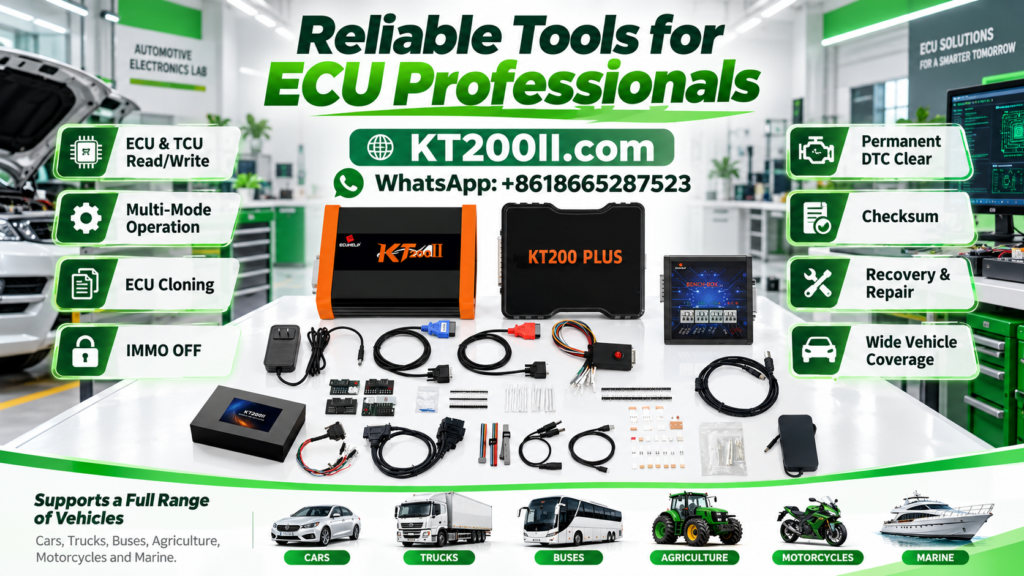
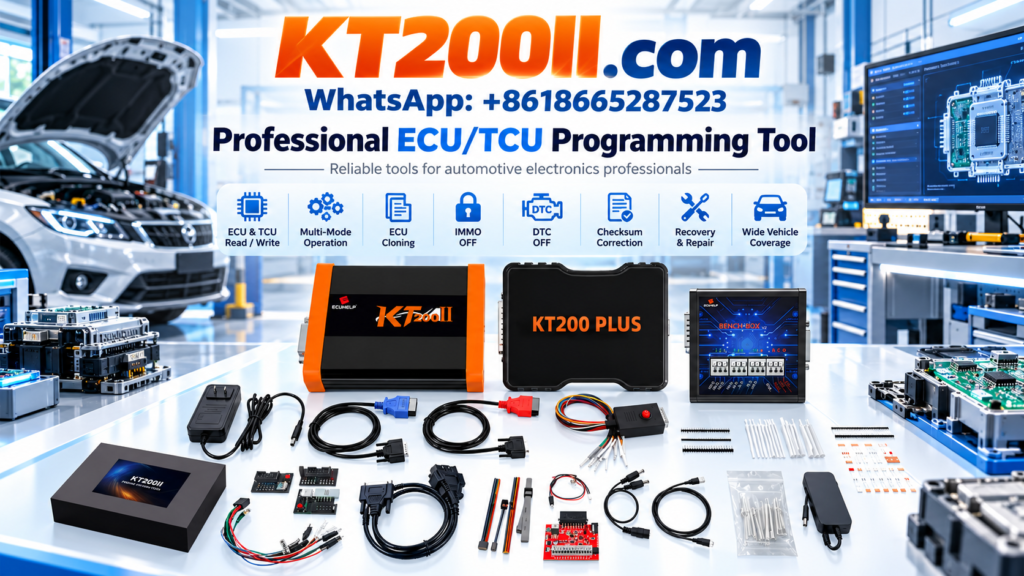
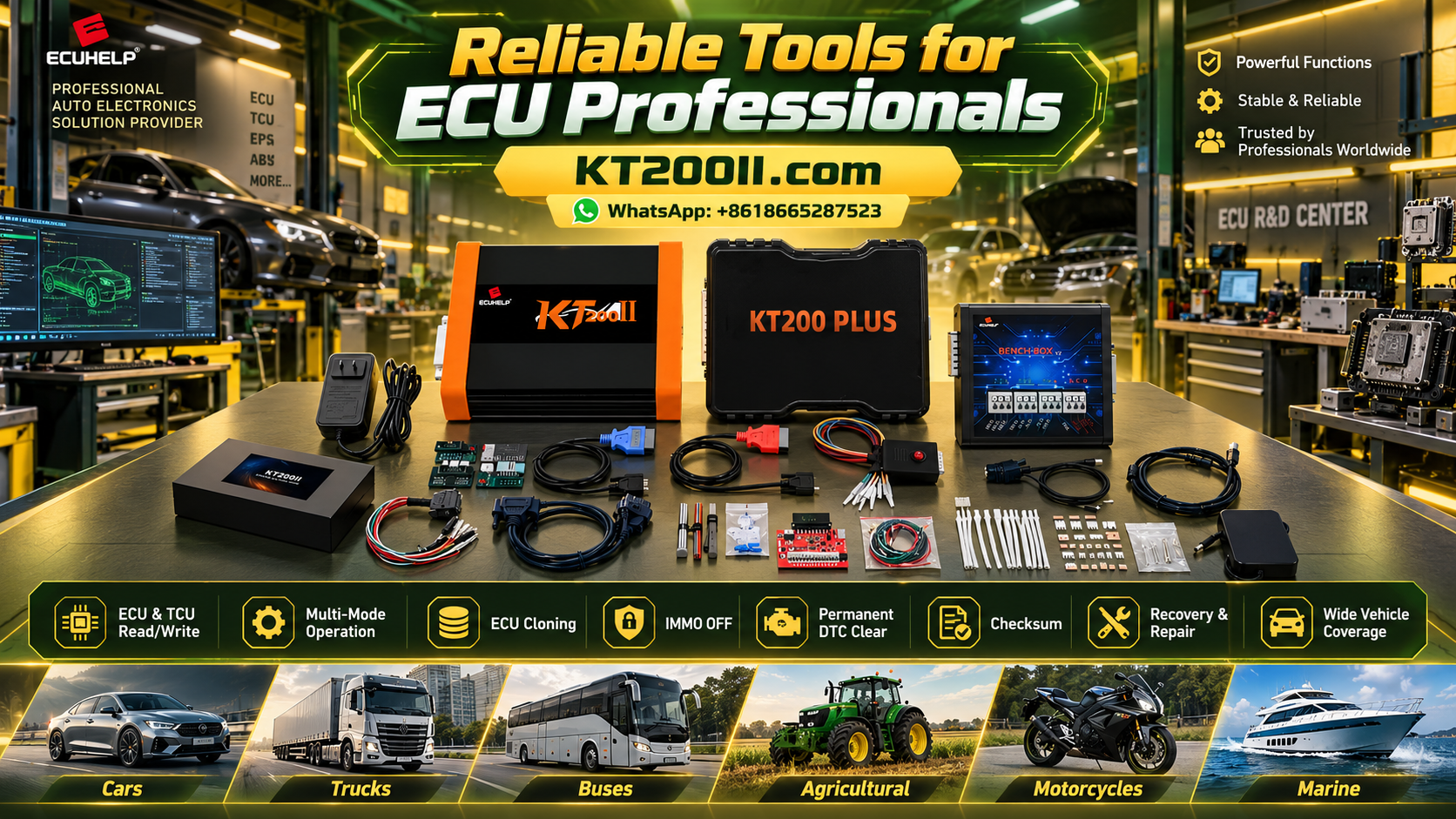
KT200II is an ECU and TCU programming solution for compatible controller applications. Its suitability for a cloning job depends on the original ECU, donor hardware, selected protocol and required memory operations.
Before starting, verify:
- The exact original and donor ECUs have been identified.
- The relevant controller application is supported.
- The required Read operations are available.
- The required Write operations are supported.
- The intended memory regions and data transfer requirements are understood.
- The selected OBD, Bench or other documented access method is appropriate.
- The original data has been preserved where supported.
- Any required post-programming configuration has been identified.
Support for a particular ECU does not automatically guarantee complete cloning support. Some controllers may support certain memory operations but require additional manufacturer-specific procedures for a successful replacement.
For more information, visit the KT200II Product Page, review the Operation Modes page and check the KT200II Support List before starting the job.
12. Common Mistakes During ECU Cloning and Replacement
Choosing a Donor ECU Based Only on Appearance
Similar housings and connectors do not guarantee matching internal hardware or software. Compare the controller identification and verify the intended application.
Assuming Every ECU Can Be Fully Cloned
Available memory operations and data-transfer requirements vary between controllers. Confirm the actual support for the exact ECU.
Using an Incomplete Backup
A successful Read operation may cover only a particular memory region. Record which data was retrieved and verify whether the documented procedure requires additional information.
Ignoring Software and Vehicle Configuration
Hardware compatibility alone does not establish that the donor software matches the target vehicle. Check the software application and any required configuration procedures.
Overlooking Immobilizer Requirements
Some replacement ECUs require authorized pairing or adaptation. Confirm these requirements before installing the donor unit.
Skipping Post-Programming Verification
Verify controller communication, relevant diagnostic information and required vehicle functions after the operation. A successful Write message alone does not establish that the entire repair is complete.
ECU Cloning and Replacement Checklist
- Record the original ECU part number and hardware revision.
- Identify the donor ECU and verify compatibility.
- Check the available software identification.
- Confirm the supported programming protocol.
- Verify the required Read and Write operations.
- Preserve original data where supported.
- Confirm file and memory-region compatibility.
- Check the electrical setup and connection diagram.
- Identify coding, configuration and security-related requirements.
- Complete post-programming diagnostics and functional checks.
Frequently Asked Questions
What is the difference between ECU cloning and ECU replacement?
ECU cloning transfers specified data from an original controller to a compatible donor ECU. ECU replacement is the broader process of installing another controller and completing the required programming, coding or configuration.
Can I clone an ECU if the original controller is completely dead?
Possibly, if a verified backup or another supported way to obtain the required data is available. If essential data cannot be accessed or recovered, a cloning procedure may not be possible.
Does the donor ECU need to have the same part number?
The exact requirements depend on the controller and vehicle application. Matching part numbers can help establish compatibility, but revisions, hardware differences and manufacturer-specific requirements must also be considered.
Does ECU cloning always preserve immobilizer compatibility?
Not automatically. Immobilizer and security-related requirements vary by vehicle architecture. Verify whether the documented procedure covers the relevant data transfer and whether additional authorized adaptation is required.
Can KT200II clone every ECU?
No universal support should be assumed. Cloning capability depends on the exact controller, supported protocol, accessible memory regions and required operations. Check the official support information before starting.
Should I perform diagnostics after ECU replacement?
Yes. Confirm controller communication, review relevant fault codes and complete any required coding, adaptation and functional checks before returning the vehicle to service.
KT200II Technical Resources
- KT200II Product Page — explore ECU and TCU programming equipment.
- KT200II Operation Modes — review supported programming methods.
- KT200II Software — access software-related information.
- KT200II Support List — check controller compatibility and supported operations.
- KT200II Technical Blog — explore additional ECU programming guides.
- ECUHELP Official Store — visit the official purchasing website.
Conclusion
ECU cloning and ECU replacement are related repair approaches, but they involve different requirements. Cloning focuses on transferring supported data to a compatible donor controller, while replacement may require software programming, coding, configuration or authorized adaptation.
Before choosing either method, identify the original and donor ECUs, verify hardware and software compatibility, confirm the required programming operations and preserve original data wherever possible.
For KT200II users, checking the supported controller information and following the documented procedure for the exact ECU are essential steps toward a reliable repair.
For more information about compatible controllers and programming methods, visit the KT200II Support List.