ECU Remapping Explained: How Engine Control Unit Calibration Works
ECU Remapping Explained: How Engine Control Unit Calibration Works
Modern vehicles rely on electronic engine management systems to control fuel injection, ignition timing, turbocharger pressure, engine torque and emissions. These functions are managed by the Engine Control Unit (ECU), which uses programmed software and calibration data to determine how the engine operates under different conditions.
ECU remapping is the process of modifying selected calibration parameters inside the engine control software to change certain engine operating characteristics.
For professional automotive technicians, understanding ECU remapping requires knowledge of engine management, calibration maps, memory structures and programming methods.
In this guide, we explain how ECU remapping works, which parameters may be adjusted, how Flash memory is accessed and what technicians should consider when using professional programming equipment such as KT200II.
1. What Is ECU Remapping?
ECU remapping refers to modifying selected software calibration data stored inside an engine control unit.
Manufacturers develop engine control software to manage engine operation under different loads, speeds, temperatures and driving conditions.
These software configurations contain calibration tables and control strategies that determine how the engine responds to driver inputs and operating conditions.
Depending on the engine architecture, ECU remapping may involve adjusting:
- Fuel injection quantity.
- Fuel injection timing.
- Ignition timing in gasoline engines.
- Turbocharger boost pressure.
- Engine torque limitations.
- Throttle response.
- Air-fuel mixture targets.
- Rail pressure targets in diesel applications.
- Selected temperature and protection strategies.
Not every ECU exposes the same calibration parameters. Available adjustments depend on the engine design, ECU software and calibration structure.
2. How Does an ECU Control Engine Performance?
The ECU receives information from sensors installed throughout the vehicle and uses this information to calculate the appropriate engine control commands.
Common input signals include:
- Engine speed.
- Accelerator pedal position.
- Air intake temperature.
- Engine coolant temperature.
- Manifold pressure.
- Mass airflow.
- Oxygen sensor information.
- Fuel pressure.
- Knock sensor signals.
After processing these signals, the ECU controls different engine actuators, including injectors, ignition coils, throttle bodies and turbocharger control systems.
ECU remapping changes selected calibration values within the software rather than physically replacing these components.
3. Understanding ECU Calibration Maps
Calibration maps are an important part of engine control software.
They contain values used by the ECU to determine how specific engine functions should operate under different conditions.
Fuel Injection Maps
Fuel injection maps determine fuel delivery according to engine speed, load and other operating conditions.
In diesel engines, calibration may involve injection quantity, injection timing and rail pressure targets.
In gasoline engines, fuel delivery is coordinated with air intake, engine load and combustion requirements.
Ignition Timing Maps
Gasoline engines use ignition timing maps to determine when the spark plug should ignite the air-fuel mixture.
Ignition timing influences combustion efficiency, engine response and knock behavior.
Boost Pressure Maps
Turbocharged engines use boost control strategies to regulate intake pressure.
These calibrations help manage turbocharger operation according to engine speed, load, temperature and protection requirements.
Torque Maps
Torque management is an important part of modern engine control.
The ECU may calculate requested and permitted torque according to accelerator input, transmission requirements, temperature and other operating conditions.
Temperature Protection Maps
Engine protection strategies help control operation under high-temperature or abnormal operating conditions.
These functions are important for protecting engine components and maintaining reliability.
4. ECU Remapping for Gasoline and Diesel Engines
Gasoline and diesel engines use different combustion processes, so their calibration strategies are not identical.
Gasoline Engine Calibration
Gasoline ECU calibration may involve:
- Ignition timing.
- Fuel injection quantity.
- Air-fuel ratio targets.
- Throttle control.
- Turbocharger boost.
- Torque management.
- Knock control strategies.
Gasoline direct-injection engines may have additional injection pressure and injection timing requirements.
Diesel Engine Calibration
Diesel ECU calibration may involve:
- Injection quantity.
- Injection timing.
- Common rail pressure.
- Turbocharger boost.
- Torque limitation.
- Smoke limitation.
- Air management.
Diesel engines rely on compression ignition, so their calibration requirements differ significantly from gasoline engines.
5. What Is the Difference Between ECU Remapping and ECU Programming?
Although these terms are related, they do not describe exactly the same activity.
| Feature | ECU Programming | ECU Remapping |
|---|---|---|
| Main Purpose | Read, write, update or restore controller software | Modify selected engine calibration parameters |
| Typical Operations | Flash reading, writing and software replacement | Fuel, ignition, boost and torque calibration |
| Software Changes | May install or restore software | Changes selected calibration values |
| Applications | ECU repair, replacement and supported updates | Engine performance and calibration development |
| Required Knowledge | Memory architecture and programming protocols | Engine operation and calibration engineering |
ECU programming equipment provides access to supported memory operations. Actual calibration development generally requires additional software and technical knowledge.
6. How ECU Remapping Works: Reading and Writing Flash Memory
Many ECU remapping workflows begin by reading the original ECU software or calibration data.
A typical workflow includes several stages.
Step 1: Identify the ECU
Record the ECU manufacturer, part number, hardware identification and software version.
Step 2: Select the Programming Protocol
Determine whether the specific ECU supports OBD, Bench or Boot programming for the required operation.
Step 3: Read Original ECU Data
Use compatible programming equipment to read the supported memory region.
Depending on the ECU, the available file may contain application software, calibration data or other memory information.
Step 4: Save the Original File
Keep an unchanged backup of the original data before making modifications.
Step 5: Analyze Calibration Data
Specialized calibration software can be used to identify supported maps and parameters within the original file.
Step 6: Modify Selected Parameters
Qualified calibration specialists make controlled adjustments according to the engine hardware, operating requirements and applicable technical limits.
Step 7: Verify the Modified File
Check file compatibility and required checksum corrections before programming.
Step 8: Write the Modified File
Use the correct supported programming procedure and maintain stable electrical conditions during writing.
Step 9: Perform Diagnostic Testing
Verify ECU communication, diagnostic trouble codes and engine operation after programming.
7. OBD, Bench and Boot Methods for ECU Remapping
The method used to read or write ECU data depends on the controller and supported programming protocol.
OBD Remapping
OBD programming communicates with the ECU through the vehicle diagnostic connector.
For supported controllers, it allows technicians to access selected memory operations without removing the ECU.
Bench Remapping
Bench programming connects directly to the ECU outside the vehicle using the documented power, ground and communication connections.
This method is useful for selected ECU applications where direct access is required.
Boot Remapping
Boot programming uses supported low-level processor access to perform selected memory operations.
Depending on the ECU architecture, it may provide access to memory regions that are unavailable through normal diagnostic communication.
Not every ECU supports all three methods. Always verify the exact controller and protocol.
8. What Is Checksum Correction in ECU Remapping?
Checksum verification is an important consideration when modifying certain ECU software files.
Some control units use checksum or integrity validation mechanisms to detect changes in stored software data.
When calibration data is modified, the corresponding integrity information may also need to be recalculated.
If the required checksum is incorrect, the ECU may reject the software or report internal programming errors, depending on its architecture.
Technicians should use compatible checksum tools and verify the final file before writing it to the controller.
9. Common ECU Remapping Problems
Incorrect Original File
Using an incompatible reference file can cause incorrect calibration or programming problems.
Wrong ECU Identification
Different hardware and software versions may require different calibration structures.
Checksum Errors
Incorrect integrity information may prevent successful software validation.
Unstable Power Supply
Voltage interruptions during programming can interrupt memory writing and potentially cause ECU communication problems.
Incorrect Calibration Changes
Excessive or poorly validated adjustments may increase mechanical stress, combustion temperatures or emissions.
Incomplete Diagnostic Testing
A successful file write does not prove that the engine operates safely or correctly.
Post-programming diagnostics and appropriate operating-condition testing are essential.
10. Does ECU Remapping Increase Engine Performance?
ECU remapping can change engine operating characteristics when the original calibration contains adjustable parameters and the engine hardware supports the intended changes.
Possible outcomes may include:
- Different throttle response.
- Changes in available engine torque.
- Changes in power delivery.
- Modified boost pressure targets on supported turbocharged engines.
- Changes in fuel delivery strategies.
However, results depend on the engine design, hardware condition, original calibration and quality of the modified software.
There is no universal performance improvement that applies to every vehicle.
Calibration changes must respect mechanical limits, thermal conditions, transmission capacity and applicable emissions regulations.
11. How ECU Remapping Affects Transmission Systems
Engine and transmission controllers frequently exchange torque and operating information.
When engine calibration changes torque delivery, the transmission may also be affected.
Depending on the vehicle architecture, technicians should consider:
- Engine torque reporting.
- Transmission torque limits.
- Gear shift behavior.
- Clutch capacity.
- Transmission temperature.
- Communication between ECU and TCU.
On electronically controlled automatic transmissions, engine and transmission calibration should be considered together when evaluating system compatibility.
12. How KT200II Helps With ECU Remapping Workflows
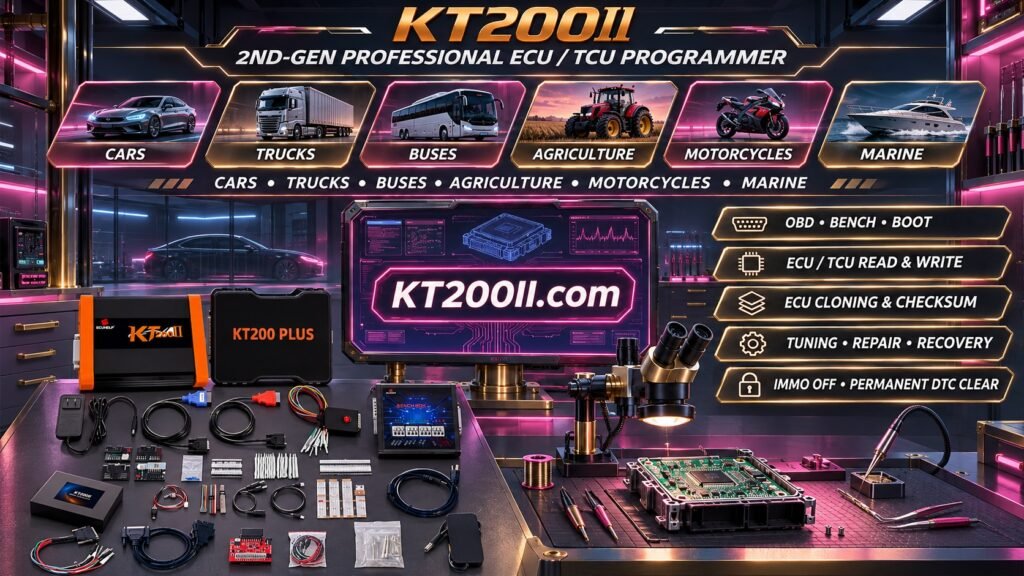
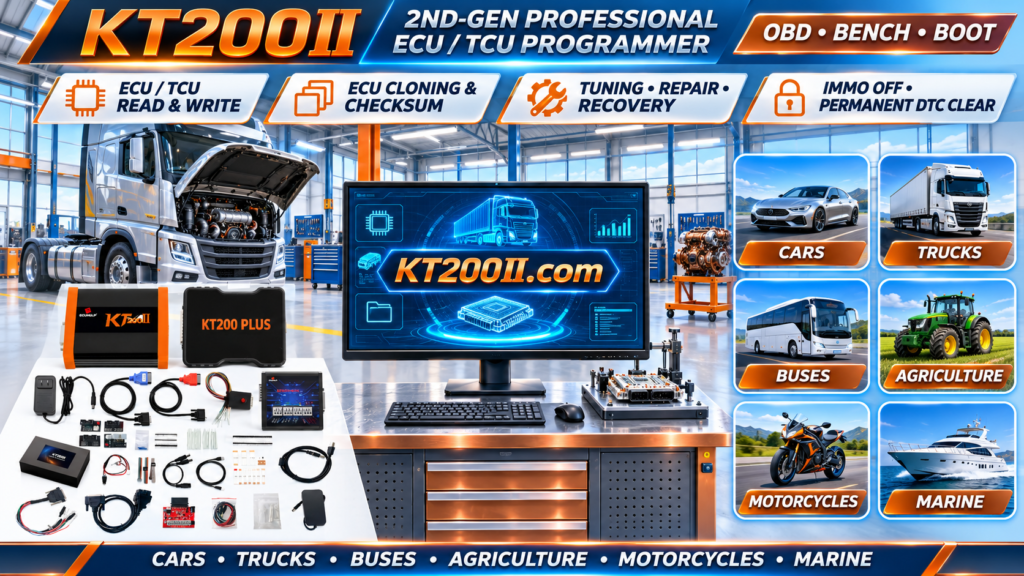
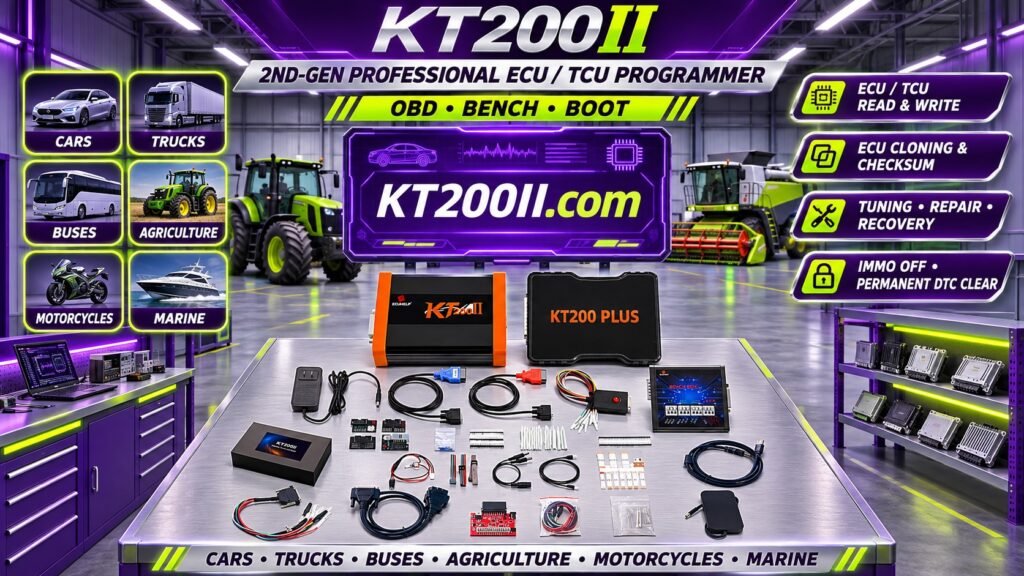
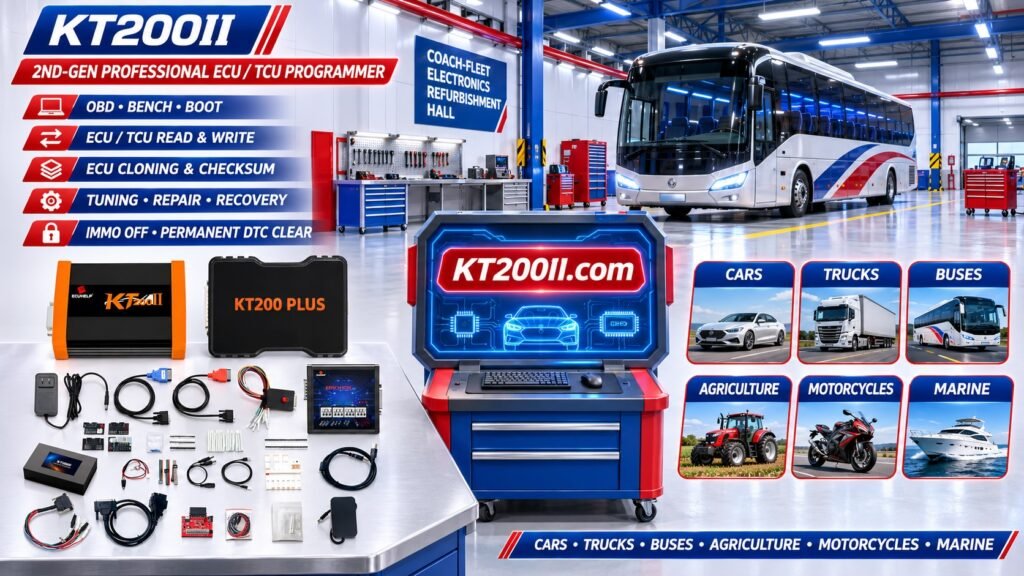
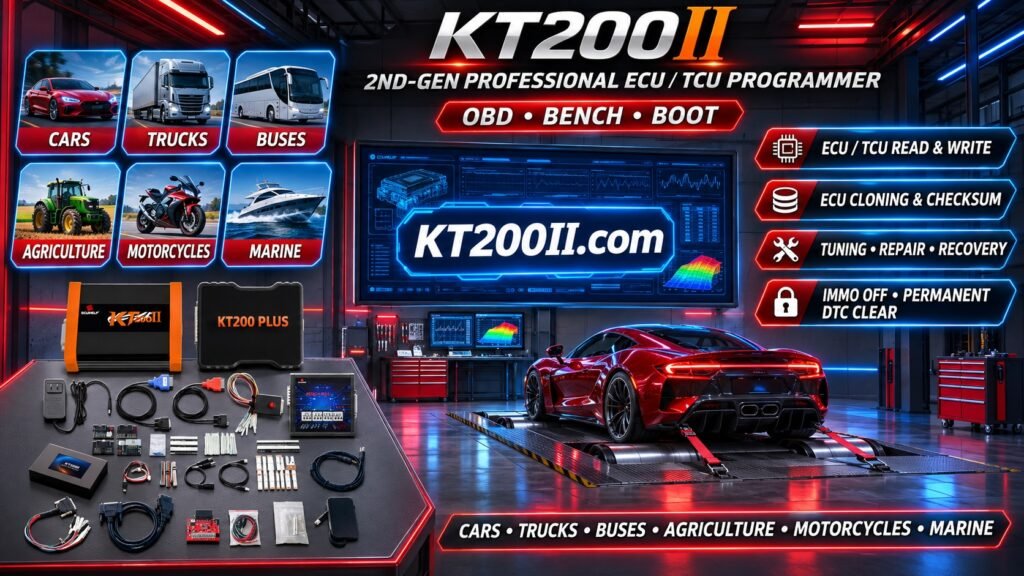
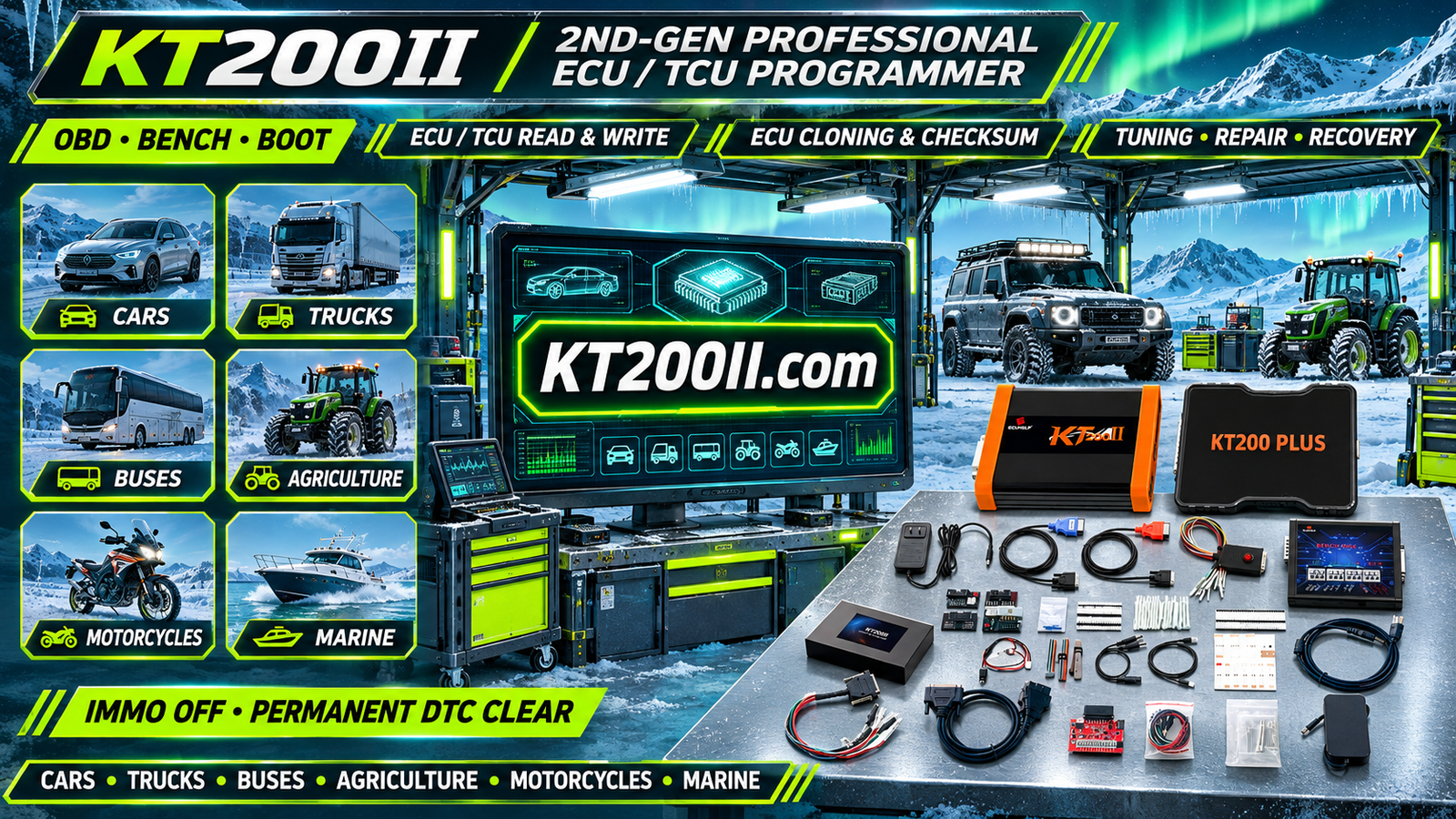
KT200II is a professional ECU and TCU programming solution designed for automotive electronics technicians and repair workshops.
For supported ECU applications, KT200II can provide access to selected programming operations used in ECU reading and writing workflows.
Depending on the exact ECU and available protocol, functions may include:
- ECU identification.
- Supported Flash reading.
- Supported Flash writing.
- Selected EEPROM operations.
- OBD programming applications.
- Bench programming applications.
- Boot programming applications.
- Supported ECU and TCU programming operations.
Important: KT200II provides supported ECU programming functions. Calibration map analysis and modification may require separate specialized software and calibration expertise.
Available programming functions vary according to ECU hardware, software version and selected protocol.
Explore KT200II technical information:
KT200II Supported ECU and TCU List
13. How to Choose ECU Programming Equipment
For technicians involved in ECU remapping and automotive electronics repair, choosing appropriate programming equipment is important.
Consider the following factors:
- Supported ECU manufacturers and models.
- Exact hardware and software compatibility.
- OBD programming coverage.
- Bench and Boot programming availability.
- Flash reading and writing functions.
- Selected EEPROM operations.
- Required cables and adapters.
- Connection diagrams.
- Software updates and technical support.
Do not assume that a programmer supports every ECU from a particular manufacturer just because it supports one controller in that ECU family.
14. ECU Remapping Safety Checklist
Before performing an ECU remapping operation, verify the following:
- Vehicle and engine identification completed.
- ECU part number recorded.
- Hardware and software versions checked.
- Correct programming protocol selected.
- Supported programming method confirmed.
- Power supply verified.
- Original ECU data backed up.
- Calibration file compatibility checked.
- Checksum requirements verified.
- Modified calibration reviewed.
- Applicable emissions regulations considered.
- Programming operation completed successfully.
- Diagnostic trouble codes checked.
- Engine operation verified under appropriate conditions.
Frequently Asked Questions
What is ECU remapping?
ECU remapping is the process of modifying selected engine calibration parameters stored in an ECU to change how the engine operates.
Is ECU remapping the same as ECU programming?
No. ECU programming includes reading, writing and updating controller software, while remapping specifically focuses on modifying selected calibration parameters.
Can KT200II perform ECU remapping?
KT200II supports selected ECU reading and writing operations that can form part of a remapping workflow. Calibration map analysis and modification require appropriate additional software and expertise.
Can all ECUs be remapped through OBD?
No. Some controllers support OBD reading and writing, while others require Bench or Boot programming.
Does ECU remapping require Flash reading?
Many remapping workflows involve reading the original Flash data. However, the exact procedure depends on the ECU architecture and supported programming method.
What happens if the wrong calibration file is written?
An incompatible file can cause engine operating problems, communication errors or programming failure. Always verify hardware, software and file compatibility before writing.
Does ECU remapping affect fuel consumption?
Fuel consumption can change depending on the calibration, driving conditions, engine load and driver behavior. There is no guaranteed reduction for every vehicle.
Can diesel and gasoline ECUs use the same calibration software?
Not necessarily. Diesel and gasoline engines use different control strategies and calibration structures. Compatible software and technical knowledge are required for each application.
Conclusion
ECU remapping is an important area of modern automotive electronics, combining engine calibration knowledge with ECU programming technology.
Understanding fuel injection, ignition timing, boost control, torque management and memory architecture helps technicians approach calibration work more effectively.
Before reading or writing an ECU, always identify the exact controller, verify protocol compatibility and preserve the original software data.
KT200II provides ECU and TCU programming functions for selected automotive applications and can support the reading and writing stages of compatible ECU workflows.
For more product information, programming guides and supported applications, visit the KT200II Official Website.